






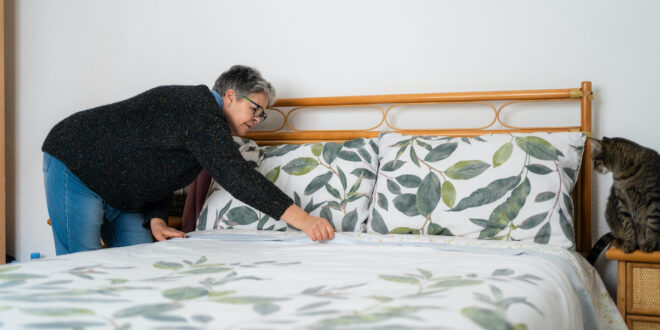
There are plenty of things we do every day without giving them much thought. We make the bed, put certain things in certain places, clean the house in a particular order, follow familiar recipes and perhaps still have a mental list of jobs belonging to particular days. Ask yourself why you do something a particular way and the answer can often be surprisingly vague: “Because that’s how I’ve always done it.”
Many of these habits began somewhere. We watched our parents, copied what happened around us and gradually absorbed a collection of unwritten rules about how a household should run. Some were practical responses to the circumstances of the time. Others reflected family values, while some simply became habits through repetition. Years later, we may still be following the same systems without stopping to ask whether they remain useful.
When the rules become invisible
Ironing is a good example. Perhaps you still iron almost everything because you grew up in a household where clothes were ironed as a matter of course. Yet modern fabrics and easier-care clothing mean some of us may be spending time on a job which no longer needs to be done in quite the same way. If you enjoy ironing, carry on. But if you dislike it, perhaps the smarter approach is to iron only the things which genuinely benefit from it.
Making the bed raises a different question. Many of us learned early in life it was simply what tidy people did, and an unmade bed can still feel strangely wrong. But if you don’t really notice whether the bed is made, and no one else is going to see it, why do it simply because you’ve always done it? On the other hand, if making the bed gives you a sense of order or makes the room more pleasant, it may still serve a useful purpose. The fact a habit was inherited doesn’t automatically make it one we need to abandon.
The same thinking can apply to countless other routines. Maybe you have always changed the sheets on a particular day, even though your household has changed. Perhaps Sunday still means a roast dinner, despite there being fewer people at home and less enthusiasm for preparing a large meal. Or perhaps you tackle certain household jobs on a particular day simply because your parents did. None of these routines is necessarily wrong. The question is whether they still fit the life you are living.
Why we keep doing things the old way
None of this means the people who taught us these routines got it wrong. They were often solving problems which no longer exist in quite the same form. A weekly roast could have been an economical way to feed a family, while a strict household routine may have been necessary when several children and fewer labour-saving appliances filled the day. What made sense then may not always be the best approach now.
Familiarity is powerful too. Once a routine becomes automatic, it takes very little thought to continue doing it. Familiar ways of doing things can provide a reassuring sense of order, particularly when they have been part of family life for decades. Some habits even carry emotional meaning, connecting us with people or times in our lives.
Is there a better way?
A useful starting point is to ask why you do something the way you do. What problem was the original routine solving? Was it saving time, money or effort? Was it creating order, showing hospitality or bringing the family together?
Then ask whether the same circumstances still apply. If you dislike ironing, do you really need to iron everything? If the Sunday roast has become more chore than pleasure, could you have it less often or simplify the meal? If you have always done a job yourself because self-reliance was valued in your upbringing, would occasionally paying someone else give you more time for things you enjoy?
The question isn’t whether the old way is old-fashioned. It is whether it still works for you.
What would you choose today?
There is no need to conduct a complete audit of your life. Choose one routine which takes up more time than you’d like, feels unnecessarily complicated or simply makes you wonder why you still do it. Ask yourself why it exists, what you are trying to achieve and whether you would choose the same method if you were starting from scratch today.
You may decide the old way really is the best way. There is nothing wrong with keeping a routine because it works, especially when it brings pleasure or gives life a reassuring rhythm. You may instead find a simpler approach which suits your circumstances better.
There is something liberating about recognising the difference between a choice and a habit. We don’t have to reject everything we learned growing up. Sometimes we simply need to look at an old rule with fresh eyes and decide whether it still earns its place.
After all, “That’s how we’ve always done it” is a perfectly good reason to keep something which still works. It is less convincing as a reason for never considering anything else.

Join the Discussion
Type out your comment here:
You must be logged in to post a comment.