






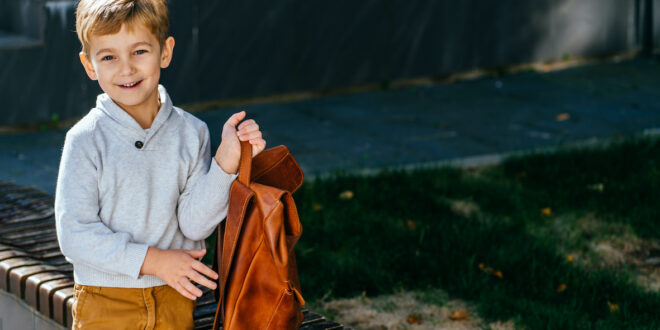
It’s the morning of your little grandson’s 5th birthday. He’s all dressed-up, with his bag on his back, and a wide missing-tooth grin spread across his excited face. In fact, he’s never looked cuter. So why wouldn’t you want to share with your social media chums the image of him, hand in hand with his mum, heading off to his first day at school? Well, as it turns out – there are a quite a few reasons why that’s exactly what you shouldn’t do! At least not without some strict permission gathering and digital safeguards in place.
Once upon a time, pulling a child or grandchild snapshot out of your wallet or handbag, to show a friend, was a happy way of sharing family updates. However, in our current digital age, ‘sharing’ family pics takes on a whole new meaning, and with it, comes dangers we may not even be aware of. The digital danger of sharing images online encompasses three areas: it can put children in actual physical danger (of the kind we can probably imagine), but it can also lead to them encountering online abuse (which could then lead to physical harm). In both cases, this can also leave the children we love feeling emotionally vulnerable.
Physical danger
When we take a snap of a child, and post it online, there are often numerous background details which give away vital clues about the child’s life. If we add a caption, we can inadvertently give away even more personal details about them. When our social media platform isn’t private, anyone surfing the site, can access the information – or they may be able to discover the child’s image on another person’s site if it has been ‘shared.’ From a casual photo, online predators may be able to ascertain your grandchild’s home address, the general location of their home, their route to school, the school they attend (school uniforms, and logos on clothing or school bags, are giveaways, as is the number of the bus they are about to board). Anyone searching online social media platforms may be able to access your name (which, coupled with a caption about the photo you’ve posted), may alert them to the relationship you have with the child in the photo. When someone puts these clues together, they immediately rob a child of one of their greatest protections – the ‘stranger-danger’ rule. After all, would a child really consider someone who approaches them to be a ‘stranger’ if they already know their name, age, street address, school, school route, and who their parent or grandparent is?
Online abuse
While physically accosting a child in the street is less common, online targeting of young victims is rife. Armed with similar details to those described above, it doesn’t take a great deal of effort, on the part of a predator, to obtain a child’s personal online details (such as their social media account, email, or phone number). When this happens, a child can be even more vulnerable to abuse. That’s because most children now have devices of their own, and many young people access them without adult supervision. A predator can be contacting their victim in broad daylight, via their device, without any adult being aware of it. What’s more, online abuse in the form of grooming, and information and photo requests, can quickly turn to a physical encounter when a child agrees to ‘meet up’ in the real, rather than the virtual, world.
Emotional harm
Children, even pre-teens, are adept at using social media to their ‘advantage.’ Which is why bullying is no longer confined to the school playground. When you post an image of your child or grandchild online, it’s not only your friends who get to see it, it can be other children and young people too, and some of them can be cruel – both online and in person. Even adults can make comments which, while unintended, can cause a child to feel embarrassment, or even shame.
The pride and joy your children and grandchildren give you can be a catalyst for your wanting to share their milestones and achievements with others. But the repercussions of doing so can be unthinkable. Think before you post, and always seek permission from the adults responsible for a child’s safety – and also the child themselves where their age makes it appropriate to do so. For more information on how to keep the children you love, safe, head to sites such as those provided by the NZ Police and ThinkUKnow. And be aware, the scenarios above are only a tiny fraction of the many ways in which children may be targeted by online predators, and others, who wish to harm them.

Join the Discussion
Type out your comment here:
You must be logged in to post a comment.