






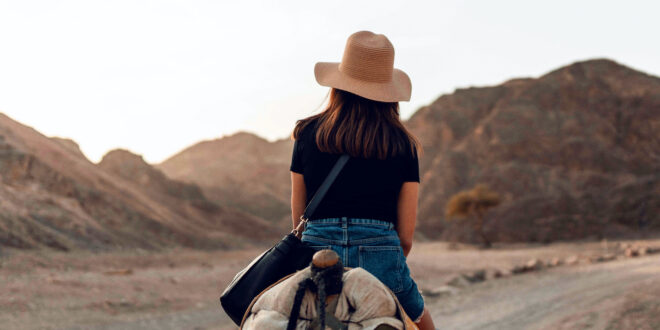
Travel is often sold as a chance to escape the everyday, see somewhere beautiful and return home with a camera full of photographs. Yet there can be another reward, less obvious while we are booking flights or packing a suitcase. Leaving familiar surroundings can reveal things about ourselves we rarely notice at home. We may discover we are more resourceful than we thought, more comfortable with our own company or more willing to try something unfamiliar. Even for experienced travellers, stepping into a different environment can shift our perspective in unexpected ways.
You are more capable than you think
Familiar routines make life easier, but they can also hide how much we rely on them. Travel removes some of those familiar signposts. A train leaves from the wrong platform, a restaurant menu is difficult to decipher, a booking goes awry or a planned route suddenly becomes impossible. None of these situations is necessarily dramatic, yet each asks us to stop, think and work out another way forward.
There is a useful lesson in discovering we can manage when things do not go according to plan. A cancelled tour, a sudden change in weather or a missed connection may be frustrating, but repeatedly wishing circumstances were different rarely helps. Sometimes the practical response is to find another route; sometimes it is simply to accept the change and make something of the afternoon. Once we have successfully dealt with a few unexpected situations, unfamiliarity can become less intimidating. We may even find ourselves returning home with greater confidence in our ability to handle life’s smaller disruptions.
There is pleasure in doing less
At home, a day can disappear beneath appointments, errands, household jobs and familiar obligations. Travel creates an opportunity to step outside those routines, even if only temporarily. Sitting in a café watching people pass, wandering through a market without a particular destination or spending an afternoon beside the water can feel surprisingly indulgent when we are used to having a reason for everything we do.
There is no requirement to see every famous landmark or squeeze another attraction into an already full day. In fact, travelling with fewer expectations can leave more room for noticing a place. A quiet street, a local café, an unexpected conversation or a small museum may end up being more memorable than an attraction everyone told you not to miss. For someone who does not naturally seek out new places, this can be an appealing way to think about travel. You do not have to become an adventurous traveller; you simply have to give yourself permission to be somewhere different and see what happens.
Other ways of living can challenge our assumptions
One of the pleasures of travelling is discovering how differently ordinary life can look elsewhere. Meals may happen later, shops may close during the middle of the day, families may gather in ways unfamiliar to us and people may approach work, leisure or hospitality from an entirely different perspective. None of these differences need to be judged as better or worse. Simply noticing them can be enough to make us question some of our own assumptions.
Food offers an easy introduction to unfamiliar habits. Trying a local dish, visiting a food market or choosing something from a menu without knowing precisely what will arrive can provide more than a meal. It can become a small exercise in curiosity. We may find new flavours we love, discover traditions behind familiar ingredients or simply become more comfortable with not having all the answers. The same curiosity can extend beyond food, whether we are listening to another language, observing local customs or talking to people whose lives look very different from our own.
Independence can take many forms
Travel does not need to involve a solo adventure across the other side of the world to build independence. Someone who normally travels with a partner might spend an afternoon exploring alone, while a person accustomed to organising everything for the group might hand over the itinerary for a day. Small changes can be surprisingly liberating.
There is something satisfying about making a decision simply because it suits you. You might choose the museum rather than the shopping street, sit quietly with a coffee while your companion explores somewhere else, or take a different route back to the hotel. These moments can remind us individuality does not disappear simply because we are travelling with other people. Even a small taste of independence can make familiar life feel a little more open when we return home.
The benefits can follow you home
The most interesting travel experiences do not necessarily end when the suitcase is unpacked. A different pace of life may make us reconsider how we spend our weekends. An experience of managing alone in an unfamiliar place might encourage us to try something independently at home. Meeting people with different priorities can prompt us to think about our own.
There can be particular value in these experiences as we get older. Curiosity does not have a use-by date, and giving the mind unfamiliar things to notice, remember and work out can provide useful mental stimulation. Travel can bring social connection, physical activity, new experiences and a break from established routines, all of which can contribute to wellbeing in later life. Research into older adults has found associations between leisure travel and lower loneliness and depressive symptoms, as well as better cognitive function, although such findings do not establish travel as a direct cause.
Retirement can bring more freedom over how we spend our time, but it can also make life very comfortable and predictable. There is nothing wrong with enjoying a familiar routine, yet occasionally stepping beyond it can be invigorating. A trip does not need to involve an ambitious itinerary or an exotic destination. It might simply mean choosing somewhere unfamiliar, taking a different route, talking to someone new or allowing yourself to spend a few days seeing ordinary life from a different perspective.

Join the Discussion
Type out your comment here:
You must be logged in to post a comment.