






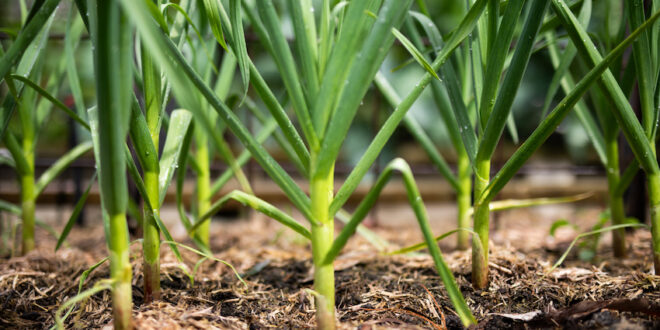
Allium rust – yes, we know it’s bad. So bad, in fact, many gardeners are giving up growing alliums (plants in the onion family) altogether. This is sad, especially for garlic lovers, because, garlic is a ‘prize’ crop – one of those bulbing veggies we love to boast about. So we have some suggestions for climbing back on the garlic wagon and growing bigger bulbs than ever! Here’s how you can strive to make it happen:
Plant early
Garlic rust (Puccinia allii) is a fungal disease which arrives in our gardens, in earnest, in spring. It thrives in cool, humid weather, and when it attacks young garlic plants, it quickly invades their foliage. As the leaves of the plant rapidly die off, the immature bulb is prevented from developing. However, when rust attacks a more mature garlic, with a full head of foliage, we have time to act, and save the plant. This is why it’s important to plant your garlic cloves as early as possible (autumn is best, if your region’s climate allows), so the plants have time to get well established before rust season arrives.
Plant under cover
Garlic rust is an airborne disease. Its spores (the microscopic reproductive parts of the fungus) form in rusty orange pustules, visible on the garlic’s leaves. When they are mature, these spores take advantage of air movement to spread from one plant to another, setting up homes when they find a suitable host. When we plant our garlic in the shelter of a cover (whether under a cloche, in a poly tunnel, or in a propagation house), we are limiting the degree to which the spores can reach our plants. Your cover doesn’t need to be sophisticated – even covering plants with a clear plastic bottle (which has had its base snipped off), can make a huge difference.
Pottle plant
Most of us need our premium undercover spots, such as tunnels or glass houses, for our summer crops. But these spots can still be used for autumn plantings of garlic when you sow the cloves into a roomy pot. Once spring comes around, and the garlics have a good head of foliage, move them out into the garden proper by upending the pot, sliding out the garlic, soil and all, and popping the plant into a prepared hole in the ground.
Think nutrition
A healthy garlic is able to withstand rust attack much more readily than a plant that is spindly. Garlic is a hungry plant, so wherever you are growing your cloves, keep them healthy by ensuring their ground is enriched with lashings of mature compost, chopped kelp, and sterilised animal manure. Mix it all into the soil, and keep the ground loose and friable.
Increase drainage
Garlics growing in wet ground won’t thrive – and garlic rust loves a loser! When preparing the ground for garlic, good drainage can be ensured in several ways: If your ground is clayish, dig in plenty of compost and fine river sand. If ground is low-lying and wet, mound the soil up before you plant into it. If planting into pots, add perlite to the growing medium to prevent the soil becoming waterlogged. Don’t be tempted to add a layer of grit before filling the pot with soil – this won’t enhance drainage, and will only take up valuable root-growing space.
Build a natural barrier
Garlic rust arrives on the wind which is why, if you can create a natural barrier around your plants, the spores have less chance of reaching the garlic’s leaves. A natural barrier can be any taller plants not in the allium family (such as rhubarb, berry bushes, or corn). Tuck your garlic in amongst these plants, or in a patch surrounded by them, and you’re upping your chances of success.
Garlic rust can be infuriating, and although it can be tackled with a safe, appropriate, anti-fungal agent recommended by your garden centre, there are loads of organic alternatives you can try first. All the best with growing, and boasting, your garlic!

Join the Discussion
Type out your comment here:
You must be logged in to post a comment.