






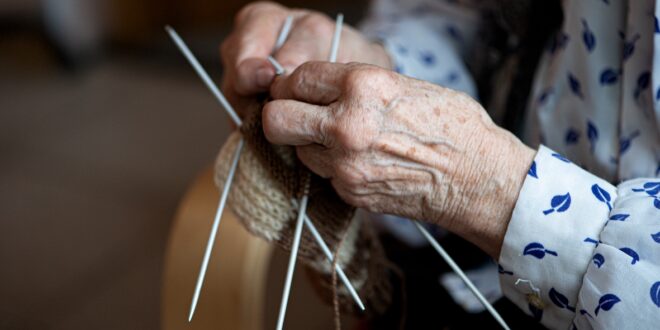
Grandma’s chores were relentless. When she wasn’t looking after children, preparing meals, and doing the washing and housekeeping, she was busy preserving, baking, knitting, sewing, patching, darning, or hemming and embroidering a tablecloth. Exhausting though it may have been, these tasks are what’s currently capturing the hearts and minds of, not only the younger generation, but those in the 50s plus age bracket. What’s more, the reasons for the uptake in these somewhat forgotten arts may not be what you expect!
Rather than out of a desire to be thrifty or because of sheer financial necessity, many ‘granny hobbyists’ are turning to traditional crafts as a pushback in a world becoming increasingly digital and demanding. When everyday life is pulsing with flickering screens, social media chimes, chirps, and messages, and digital notifications from your calendar, exercise-, blood pressure-, daily steps-, and mental health-apps, the impact can be – to put it mildly – a recipe for stress and anxiety. Then there’s the sheer pace of life we’re now prompted to keep up with. If we’re not collecting the grandies from after-school care, heading to the supermarket before the traffic gets busy, contacting the bank, the council, the insurance company (because you now have to do everything for yourself), we’re busy switching energy providers, hunting out the best fuel deal for the week, or checking the supermarket specials (because a cost-of-living crisis means every dollar counts). In short, life is frenetic in a way it once wasn’t! So just how do ‘granny hobbies’ actually help out?
As it happens, many repetitive actions, of the kind to be found in activities such as knitting and darning, actually assist in the release of serotonin (a chemical that carries messages between nerve cells, and which promotes feelings of happiness and well-being). Those same repetitive actions also signal our body to relax with the result (unless we’re becoming too frustrated over dropped stitches!), our heart rate lowers and our blood pressure can drop. Which all contributes to a feeling of quiet contentment. No wonder, then, recent research out of Anglia Ruskin University suggests taking part in arts and crafts is a way to boost happiness and life satisfaction. Not to mention a sense of purpose.
In an age of instant gratification, many granny hobbyists also value the delayed satisfaction a craft can bring. As they work, week after week, on a project, their sense of joyful anticipation is an ongoing pick-me-up, something pleasant (or even exciting) to focus on, and a way of directing attention away from the general stress of everyday life. In fact, when baking or preserving, many cooks find as much pleasure in thinking about the loved ones who will share the results of their labour, as they do about the task itself, something that connects them to those they love.
Community, and the opportunity to socialise, can be the major drawcard for many granny hobbyists. Traditional crafts no longer need to take place solely in the home. Seen as a way to improve mental health, stave off loneliness, and often contribute to charities as well, granny hobby meet-ups have grown apace over recent years. From social enterprise knitting groups to preserving workshops and mending circles, people are coming together for all the right reasons to take part in activities granny accepted as her duty!
Whether you already enjoy a traditional craft, or want to learn one, why not check the net for opportunities to engage, communally, in activities that are an antidote to your digital day!

Join the Discussion
Type out your comment here:
You must be logged in to post a comment.