





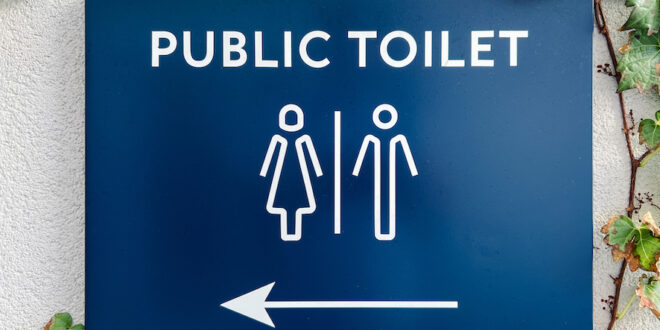
Travelling in our own country is something we look forward to. Yet, for those who require a toilet more often than they once did, it can also pose stresses. Fortunately, there are ways to locate loos in good time, while also checking out the likely state you’ll find them in.
As we grow older, the need to use the toilet can become more frequent and also more urgent. Age contributes to a loss of elasticity in the bladder – the results of which are two-fold. Firstly, our bladder can’t stretch as it once could and therefore cannot hold as much urine, and needs to be emptied more frequently. Secondly, a loss of elasticity can prevent us emptying our bladders completely when we do use the toilet.
When it comes to the urgency with which we need to use the toilet, an older brain is less likely to be able to ignore the contractions that come with a filling bladder, and therefore signals the need ‘to go’ more often than it would in a younger person. Medications, such a diuretics and other blood pressure medications, can cause us to want to empty our bladder more often, while also contributing to the need to use a toilet more frequently is urinary incontinence, a not uncommon result of an ageing bladder.
When out and about, it can be tempting to limit the amount of liquid we consume, but this often results in pleasurable pastimes, such as a coffee break, going by the by. Or the risk of dehydration, especially when travelling in a hot car on a warm day. Allowing yourself to become dehydrated means there won’t be enough liquid available to help flush out your system, with the result that bacteria are given the opportunity to multiply, potentially risking a urinary tract infection.
However, ‘holding on’ isn’t good for us, either. Although it may not impact so much on a younger or healthier person, retaining urine for longer than is good for us can result in kidney disorders, especially if you already suffer from an enlarged prostate, problems with urinary retention, or have a neurogenic bladder. Holding on for too long can cause the bladder to stretch, something which then makes it difficult to contract so urination can occur. It can harm the pelvic floor muscles (which are often already weakened in an older person) leading to urinary incontinence.
While there are apps to help you find a toilet when you require one, when travelling, it can be wise to plan your coffee breaks according to just where you are in your journey. Coffee at a cafe situated in a pleasant botanical garden or seaside park will cater for all your needs at once. If you do want further assistance, however, look no further than the reliable Campermate app. Free to download, it’s easy to use, and doesn’t overlook locating loos in even remote spots. Googlemaps or the handy off-line app ‘Maps Me’ (great for when you’re not in range of a mobile tower) pinpoint the loos you’re looking for. Individual councils often publish information about public toilets, and whether they are ‘accessible’. As you use these apps and maps, be aware some toilets in out-of-the-way places are not always well serviced, so before you leave home, it pays to pack your own supplies, including loo paper, hand sanitiser, and hand wipes. If you know the route you plan to take, it can be reassuring to check out loo-reviews on sites such as Tripadvisor or to phone ahead to I-sites for information on whether toilets are accessible or are still operating.
Well-armed with the information you require before you leave home, you can enjoy your coffee – and your road trip – with confidence!

Andrew Cox - 3 months ago
There are various toilet finder apps on the Google and Apple app stores for those who use a mobile phone, but I don’t know how well any of them cater for New Zealand locations. (Some of the apps let you add to the list, so that would eventually build up the lists.)