






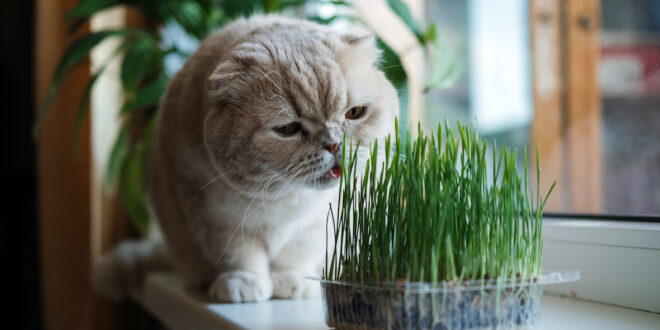
Cats are notoriously carnivorous, and for good reason. As they have evolved, cats have adapted to process the proteins found in animal based foods much more readily than those found in plant-based foods. For example, a cat can metabolise 98% of the protein found in chicken and 87% of the protein found in beef. But when it comes to soya, your moggy reaps the benefit of only 68% of the protein in this bean product. Technically speaking, a cat could be vegetarian, but to do so, it would have to consume much more food than it would want to. Just because your cat requires a high animal-product diet, it’s no reason not to provide them with plants to chew on as well. Because snacking on plants is part of cat diet and behaviour for a number of reasons.
It’s true cats often vomit after eating grass. In terms of evolution, some researchers think this habit may hark back to cat ancestors chewing on grass to help expel indigestible material (such as feathers and small bones) from wild hunts. Domestic cats may ingest grass (which is unable to be digested) in order to expel hairballs or to help ease constipation. It’s also thought grass-eating behaviour in cats may be an evolutionary ‘hang-over’ from a wild animal’s attempts to reduce parasite load in the intestine (although there’s no evidence to suggest domestic cats benefit from grass-eating in the same way). Although grass isn’t digestible, it’s possible it’s juices may deliver trace minerals and vitamins lacking in a domestic cat’s diet. Then again, cats may simply enjoy the taste of grass, or the novelty of chewing it, especially if your cat is an in-doors only pet.
If you want to give your moggy a taste of the big outdoors, there are several plants in the grass family you can try growing at home. Because most grass-family seeds happily germinate in little else but moisture, you can usually grow them in a waterproof tray lined with a wad of wet paper towels. Note: always grow from non-toxic, untreated seed in case your cat consumes more than the foliage. Check out the following grasses, and get growing!
Cat grass (Dactylis glomerata): This is a fast-growing pasture grass with the more common name of ‘cock’s-foot.’ It happily grows in cool conditions but is also content to germinate in a sunny indoor spot. Although it grows to 50 cm in height, offer it’s more tender blades to your cat when they reach 10-15cm high. Leave your cat to investigate your plantings and chew on the foliage if it’s in the mood. Kings Seeds has the seed available.
Wheat, oat, and barley: These common cereals are readily available from bulk-bin food outlets. As with cat grass, offer the foliage to your cat when the blades reach 1-15cm in height and are still tender. Before the grass begins to turn yellow (as it will do when grown on paper towels) remove it (paper towels and all) to a spot in your garden where it can grow on and set seed for you to collect and germinate.
When offering your cat grass to eat, keep a close watch on how much attention they give the foliage, as eating large amounts of grass can cause blockages in a felines gut. Always check your cat is not ingesting any of the material (such as wet paper towelling) the grasses are growing in.
Stick to safe, edible grasses when growing for your cat. Avoid offering lawn grass or ornamental houseplants, as many common plants can be toxic to cats. If you’re ever unsure about what’s safe, check with your vet before letting your cat nibble.
In our next ‘growing for pets’ article, we’ll check out what you can grow at home for your dog to enjoy!

Join the Discussion
Type out your comment here:
You must be logged in to post a comment.