






Welcome to the second of our 2-part series on Urinary Tract Infections (UTIs) – an uncomfortable condition all too familiar to seniors. Last time, we talked about just what UTIs are, who is most at risk, symptoms, and why it’s so important to seek medical advice as soon as possible. As seniors, from a generation where self-help is part and parcel of who we are, we want to know what we can do, on a personal level, to avoid and manage this most uncomfortable, and potentially, very serious, complaint. So, sit back, and read on, and learn how you can become active in caring for your own urinary tract health.
Good hygiene
UTIs are caused by various different bacteria, one of the most common being E. Coli. This bacteria is present in faeces so it doesn’t take much imagination to understand how E. Coli can enter our urethra (the tube which carries urine out of the body). By using simple, good-hygiene practice (wiping from front to back after a bowel movement) we’re already helping clear E. Coli away from the urethra.
Wash your hands!
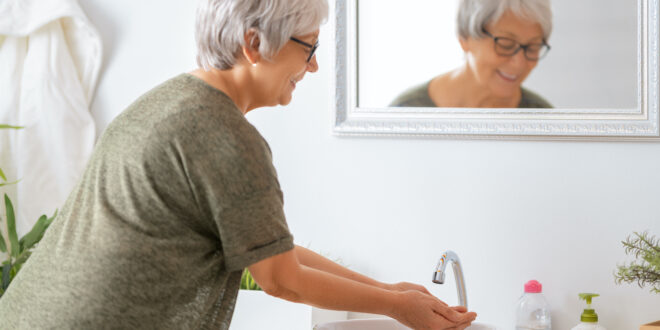
Bacteria comes from a wide variety of sources, so it’s no wonder it’s frequently present on our hands. We can reduce the opportunity for bacteria to enter the urethra by carefully washing our hands before we touch our genital area, and this includes before using the toilet. If you find you regularly have an urgent need to use the toilet, and don’t have time to wash your hands at the basin before you go, keep hand wipes on sanitiser within easy reach of the loo.
Don’t delay
The less mobile we are, the more we delay getting up to use the toilet. But here’s the thing: the sort of bacteria that causes UTIs thrives in warm, wet environments. When you delay peeing, that’s exactly the conditions you’re creating in your bladder. It’s quite normal to urinate 4-8 times in a 24 hour period, so heed the urge and don’t delay an essential trip to the bathroom.
Sex and seniors
Sexual activity has the potential to introduce bacteria into your urinary tract, but peeing as soon as practical after sex can help flush out any bacteria present.
Undercover agents
We’ve said it once, now let’s say it again: moist, warm environments provide the perfect home for bacteria. This kind of environment can be created by your underwear. When you wear tight-fitting, non-breathable underwear, heat builds up, and moisture has difficulty evaporating. Choosing loose-fitting, cotton underwear, drying yourself carefully after urinating, and changing your underwear morning and night, and after vigorous exercise, goes a long way to fighting off UTIs.
Hydration helps
Common knowledge has, for years, suggested staying adequately hydrated can help reduce the chance of a UTI infection. Now, in women at least, there’s study to back it up. By regularly hydrating, both men and women are encouraging themselves urinate, and when they do pee, they flush bacteria from the urinary tract before it has the chance to establish an infection. Unfortunately, many seniors are often averse to increasing fluid intake because it means getting up more often to go to the bathroom. However, regular urination, as well as movement, are both health-promoting.
Cranberry and caffeine
Opinions vary on the usefulness of cranberry juice in the management of UTIs. More importantly, if considering consuming cranberry juice (for any reason), it’s vital you first discuss this with your doctor. Cranberry has the potential to interfere with medications and certain health conditions. When it comes to bladder irritants, while also not conclusive, some studies suggest reducing caffeine intake may help combat the symptoms of lower urinary tract infections.
Keeping UTIs at bay may, at times, feel like an inconvenience, but the reward is well worth the discipline it takes!

Join the Discussion
Type out your comment here:
You must be logged in to post a comment.