





Note: vitamin requirements for skin health are individual to each person. Always consult your health professional before embarking on a vitamin-building routine.
Our skin is, quite literally, our first stop in protecting our body. Despite being continually exposed to an environment of harsh sun or bitingly cold weather, rough and sharp edges, knocks, scrapes, and cuts, our skin continues to work hard to shelter us from bacteria, viruses, and inflammation. On a cosmetic level, our skin can also play a part in reducing the appearance of ‘ageing.’ Yet despite all our skin does for us, many of us take it for granted, little realising we can give it a helping hand. We can so easily turn this situation around by arming ourselves with knowledge about the essential nutrients our skin requires in order to self-repair – nutrients can be delivered via a diet of vitamin-rich foods, supplements, and specific skin care products. In this and following articles, we’ll be investigating the vitamins our skin craves, what they do for the skin, and how we can supply it with them. Let’s kick-off with vitamin A.
Vitamin A
When our skin is lacking in vitamin A, it’s more likely to be susceptible to skin inflammatory conditions and infections (a deficiency of vitamin A, for example, is common in those who suffer from psoriasis). Skin lacking in vitamin A can also be slower to heal, and appear ‘older’ than it is – something which makes it vital for more mature adults. While beta-carotene (a pigment found in bright plants and fungi) isn’t vitamin A, it does convert to it and is vital for skin cell regeneration and the improvement of skin texture. What’s more, vitamin A helps reduce those darker patches of skin (commonly referred to as ‘age’ or ‘liver’ spots) that appear in more mature adults.
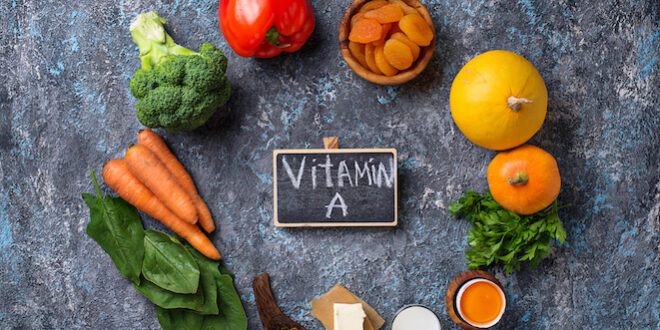
Vitamin A is found in animal-based foods such as beef and lamb liver, cooked salmon and king mackerel, cheddar cheese, eggs, whole milk, and butter. Vegetables high in vitamin A include sweet potato, kale, carrot, raw sweet red pepper, cooked silver beet, spinach, and red-leaf lettuce. Fruits rich in vitamin A include papaya, mango, fresh apricots, watermelon, guava, and tangerines. It is important to note, however, that individual genetics mean not everyone can convert the carotenoids (which include beta-carotene) found in plants into vitamin A.
Vitamin A can be found in the form of soluble powders, capsules, and tablets (some of which are available in supermarkets as well as pharmacies). Because vitamin A can be readily absorbed by the skin, it can be delivered via skin care products such as lotions, oils, and cremes, so always check the labels of these items for ingredients.
Whatever skin care products you decide to use, it always pays to carefully read the instructions that come with them. This is because, among other factors, the products are likely to contain retinol or retinal, forms of vitamin A that promote skin regeneration. Because Vitamin A is known to increase sensitivity to sunlight, it is usually advisable to apply such products at night so they can do their work out of the sun.
Vitamin A accelerates skin cell regeneration (the natural cycle of old skin cells flaking and being replaced by new skin cells) it is always possible some sort of skin irritation can occur when first using skin care products. If you know you have sensitive skin, search out skin care products designed for you – their slower delivery of vitamin A to the skin can help reduce the likelihood of rashes.
Caring for you skin is essential, and never more so than as you age. Don’t be tempted to ‘tough it out’ as many of our parents did, poo-pooing skin products as a luxury and nonsense. Along with a healthy diet, supplements where advisable, and vitamin A skin products, we can care for one of the most important organs of the body – our precious skin!

Join the Discussion
Type out your comment here:
You must be logged in to post a comment.