






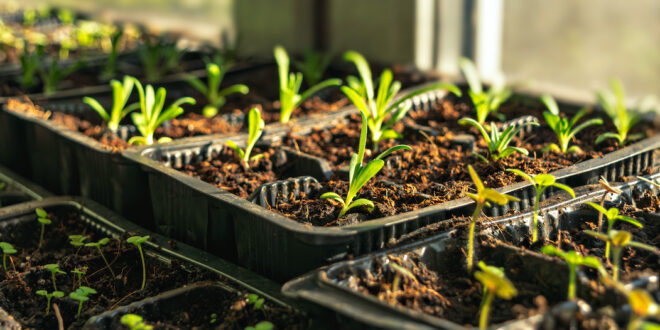
Late summer and autumn can be one of our warmest periods in the garden. It’s the traditional time for sowing the seeds of perennial plants (plants that survive, year after year). Perennial seed sown in late summer/early autumn will grow into seedlings which thrive until the warmth tapers off, hold themselves steady over winter, then bounce back into active growth come spring. Annuals (plants that flower for one year, then die) are usually sown, under cover, in spring, but in cooler parts of the country, even these seeds are best sown in late summer/early autumn.
Don’t delay!
Gather your seeds from friends or commercial outlets right away and sow them into good quality seed raising mix (just a pinch or two of each seed). Label them carefully, and as soon as they germinate and have two small leaves, use tweezers to gently tease them from the seed raising mix. Plant them into individual containers of potting mix.
Potting mix perfection
One of the biggest risks with seedlings that will winter over, is drainage (too much moisture in the ground can cause the roots of seedlings to rot). Help your seedlings’ potting mix to drain thoroughly by adding some perlite to it (perlite is a lightweight natural material available at garden centres). Up to a quarter of the volume of potting mix can comprise perlite.
Maximise sunlight
Late summer – early autumn raised seedlings are best kept under cover over winter (a great place to sit them is in an empty greenhouse or under cloches). Wherever they are, ensure the seedlings have access to as much north-facing sunlight as possible (washing down the glass or skin of the greenhouse or cloche can make a significant difference to the amount of light your little plants receive). Take care taller plants don’t shade little ones (staged shelving can help with this). Regularly rotate your pots so growth is even on all sides of the seedlings.
Do disturb!
Fewer sunny days and a lack of ventilation can create algal growth over the surface of soil around your seedlings. Combat this by opening the door of the greenhouse or lifting the cloche each day to allow air to enter, and gently disturb the top of the soil with an old kitchen fork, kept for this purpose, to allow air in and around the pot and the base of your seedlings.
Weed watch
Weeding is always important but never more so than in cooler seasons when weeds are often more vigorous in growth than your seedlings. Once weeds establish, they rob your seedlings of nutrients and healthy doses of air movement. If weeds are vigorous, consider scattering a thin coating of fine gravel over the top of the soil and around the base of the seedlings to help suppress them.
Water sparingly
Your late summer and autumn sown seedlings won’t do a lot of growing over the cooler months, which means they don’t draw on a lot of water. Generally speaking, water the pots in late summer/autumn when the top centimetre of growing mix is dry to the touch. In winter, wait until the top 2 centimetres of growing mix is dry before adding just 3-4 teaspoons of water to each small seedling.
Pest watch
Your late summer/autumn sown seedlings are living in a rarefied environment, carefully protected from the cold. Which is exactly the sort of place pests such as slugs, snails and aphids like to hide out, too. This means bug watch needs to be a daily affair. If it is safe to do so, place a scattering of slug and snail bait around the base of your seedlings. If this is not a safe option for you, visit your seedlings at night with a torch, pick off the pests, and remove them from your property.
Forget the fungus!
Various fungal diseases like to set up home on seedlings growing through the colder months. If you see signs of browning leaves, or mildew on foliage or stems, snap a photo and take it to your garden centre for advise on the best treatment. Nab the problem at the outset, to prevent it spreading.
There is great satisfaction to be had from raising your own seedlings, and they give you an early, inexpensive start to a colourful summer garden. This year, start early to brighten your ornamental beds!

Join the Discussion
Type out your comment here:
You must be logged in to post a comment.