





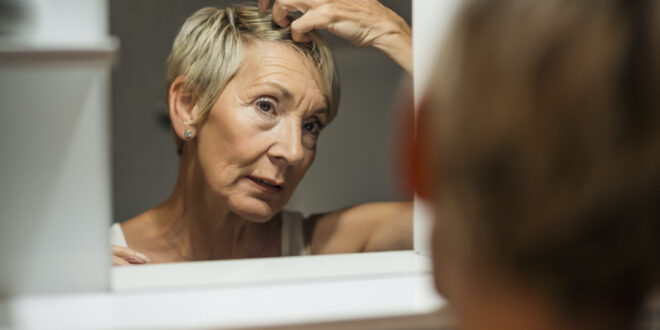
It’s not something women like to talk about. In fact, many women are more happy to discuss almost any other intimate issue but this. We’re talking about female pattern hair loss (FPHL), which affects around 40% of women by the time they reach the age of 50, and 55% of women by the time they reach the age of 80. It’s a condition which typically presents as thinning hair rather than bald spots, and it can greatly affect confidence and self-esteem. Often, women first become aware of hair loss, not by noticing it in the mirror, but by realising there is an increase in the volume of hair left in their comb or brush. (It’s normal to lose between 50 to 100 hairs from the head a day, but FPHL becomes an issue when this loss increases significantly and for a sustained period of time.)
Throughout life, hair loss in women can be caused by a number of issues including medication (such as blood thinners), stress, bouts of ill health, the excessive use of some cosmetic hair treatments, and hair styles (tightly pulled-back hair styles can, over time, contribute to hair loss). However, in later life, the main reason for hair loss in women is hormonal, something due to an individual’s genetic makeup.
With the onset of menopause, estrogen and progesterone levels start to decline, along with androgens (a group of hormones generally thought of as ‘male’ but which are, in fact, also found in women). The reduction in androgen levels mean older women’s hair tends to be not only thinner but also shorter, more brittle and each strand may take longer to grow.
Although there is currently no ‘cure’ for FPHL, and also no reliable testing for the likelihood it will occur, attending to our general level of well-being is helpful in maintaining hair health. Good levels of protein help with the body’s repair systems, and adequate iron levels help ensure sufficient oxygen levels reach hair follicles. Vitamins B12 and B7 help maintain healthy hair, as does managing stress levels through lifestyle changes. Because hair loss is ‘time-sensitive,’ should women not already be caring for their general health, it’s important to begin the moment hair loss is noticed.
The way we treat our hair can also help preserve its integrity. Less frequent washing can be helpful, as can gentle brushing, wearing lose (rather that tightly tied) hair styles, and reducing the use of chemical and heat hair treatments, and perfumed lotions. Some stylists recommend gentle head massage as a way of stimulating the hair follicles to produce the healthy oils the body naturally produces.
For a more medical approach to FPHL, it is important to first consult your GP, who may refer you to a dermatologist. Some professionals may recommend the continuous use of prescription medications to prevent hair follicles from being adversely affected by changes in hormonal levels. Topical lotions (more effective if used in the early stages of FPHL) may also be an option if prescribed. The use of scalp colouring (only on the advice of a medical professional) may be helpful in disguising hair loss, and in some cases, a wig (for which you may be eligible for funding), or attractive headwear, can help restore feelings of confidence.
Because FPHL can have a detrimental effect on mental health, women who feel the need, should talk to their GP about a referral to a counsellor. A trusted hair dresser is also likely to be a mine of information and understanding.
If you are suffering from FPHL, you’re by no means alone. It’s simply that few women feel confident talking about the condition. Which is a very good reason to brave-up and begin the conversation with your friends and family!
Join the Discussion
Type out your comment here:
You must be logged in to post a comment.