







By Helen Ellis
Like many New Zealanders, my family story includes distance.
Children growing up overseas. Grandparents back home. Love that stretches across oceans, time zones and long gaps between visits. Over the years, I’ve listened to many grandparents talk about what this distance feels like for them — the missing, the effort, the quiet wondering about whether they still matter in their grandchildren’s lives.
But at some point, a different question began to nudge at me.
What is it like for the grandchild?
Not what we hope it’s like. Not what we assume. But how it actually feels to grow up loving grandparents who live far away.
That question stayed with me, and eventually became the reason I wrote Being a Distance Grandchild.
A Perspective We Rarely Ask For
Distance families are no longer unusual in Aotearoa. With so many New Zealanders living and working offshore, grandchildren growing up far from grandparents are part of the social fabric.
Yet, their voices are rarely centred.
Distinguished Professor Emeritus Paul Spoonley, one of New Zealand’s most recognised sociologists, captures why this matters:
“When generations of the same family are geographically distant, how can relationships and connectivity be maintained, and even maximised? Helen provides some interesting insights – and options – from the view of grandchildren. She aims to ‘inform and inspire’ and she has certainly achieved both. This topic needs more attention and this book is an important contribution to our understanding.”
That sense — that this topic needs more attention — resonates deeply with me. Not because families are failing, but because they are quietly adapting, often without much guidance or reassurance.
Growing Up With Love That Has to Travel
When I began speaking with adult distance grandchildren, many were surprised by the invitation.
No one had ever asked them to reflect on what it meant to grow up far from their grandparents. Distance wasn’t a disruption — it was simply normal. Yet, once they began talking, memories and emotions surfaced which had been sitting quietly for years.
They spoke about intense visits and familiar goodbyes. About feeling deeply connected to people they didn’t see often. About belonging to more than one place — and sometimes feeling slightly out of step with all of them.
Distance shaped their family rhythms. Relationships didn’t unfold day by day, but in bursts: visits, phone calls, messages, shared moments that carried extra weight because time together was limited.
What struck me was how much of this had gone unspoken — even within families that were loving and close.
The Meaning Hidden in Small Things
One of the most consistent themes I heard was the importance of small, everyday gestures.
A regular call. A shared joke. A ritual at the start or end of visits. Being remembered.
At the time, these moments might not have seemed significant, but years later, many grandchildren recognised them as anchors — proof the relationship was steady and real, even across distance.
What grandparents did, often without knowing how it landed, mattered more than they realised.
Love, Longing, and Quiet Complexity
Alongside warmth and gratitude, another feeling appeared often: a gentle sense of missing.
Not always sadness. Not always grief. Just a sense something was slightly unfinished — time together was precious because it was limited.
This kind of feeling is sometimes described as ambiguous loss: when someone is emotionally close but physically absent. It’s a concept many grandparents recognise in themselves.
What surprised me was how clearly grandchildren felt it too.
Yet — this is not where the story ends.
Why Hope Matters
I am often asked whether writing this book felt heavy. The answer is no — not in the way people expect.
Yes, there is complexity. Yes, there is longing. But again and again, what emerged was hope.
Hope the effort mattered. Hope that love travelled further than expected. Hope that relationships built across oceans were not second-best — just different.
As Greg Payne, founder of The Cool Grandpa podcast, so beautifully puts it: “Distance doesn’t have to mean disconnection.”
Hope lives in small rituals. In showing up. In staying curious. In continuing to reach out, even when it feels awkward or uncertain.
A New Zealand Story
For New Zealand families, this conversation feels especially close to home.
We are a small country with a long history of outward movement. Distance families are not the exception — they are part of who we are.
Listening to grandchildren doesn’t give us neat answers or universal rules, but it does offer reassurance. It suggests what families are doing now — imperfectly, earnestly, with love — is building something that lasts.
Perhaps the most hopeful thing I learned while writing this book is this: when we finally listen to the voices of grandchildren, we discover far more has crossed the distance than we ever imagined.
——
Helen Ellis is a New Zealand researcher, author and anthropologist, and the founder of DistanceFamilies.com. She is also a long-time practitioner of distance parenting and grandparenting. Three of her four children, and six of her seven grandchildren (aged 2 to 26), live in the United States, England and Scotland.
In her research, Helen asks a simple but rarely voiced question: “How is distance familying for you?”
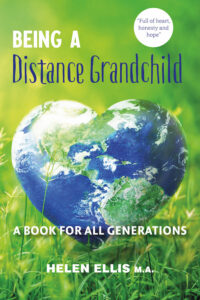 Her Distance Families book series weaves together personal experience with extensive global research. Her latest book, Being a Distance Grandchild, is out now. Helen is passionate about supporting each generation in distance families to better understand how it is for the others — while gently sharing practical insights into how to do it.

Join the Discussion
Type out your comment here:
You must be logged in to post a comment.