
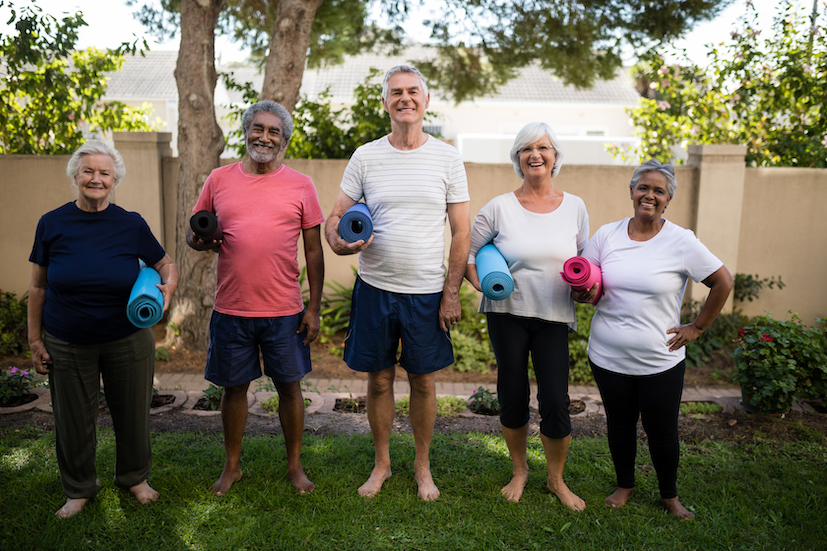
We all know movement is one of the key elements in maintaining health and independence as we age. However, joining a senior gym or dance class isn’t within everyone’s means. If you live rurally, or work during the day, there may be practicalities which make attending formal movement groups impossible. However, these factors don’t need to hold us back, because starting your own informal movement group is do-able. If you’re keen, here’s how to make it happen, and more importantly, how to keep it going!
- Base your group around your personal choice of movement – this way, you’re in the best position to enthuse others.
- Remind those who want to join, that you’re an enthusiast, not a professional or a coach, and they should always seek advice from their medical professional before they join.
- You’re an informal group, not a club, so spend your time moving, rather than attending to business. You don’t require the formalities of AGMs, office holders, and agendas in order to get fit!
- Make start times sharp – seniors have busy lives and it’s frustrating to have to wait round for others to arrive before the movement begins.
- Keep your costs down (to zero, if possible). Do this by meeting in a public space (such as a park or, if it’s raining, a covered area such as a band rotunda or member’s garage). Ask at your local council if there are free or low-cost indoor meeting spaces. If your movement group requires equipment (such as weights) can you keep it simple by using (for instance) plastic milk bottles filled with sand rather than dumbbells? Op-shops are also a great place to source simple movement equipment such as skipping ropes, resistance bands, tennis rackets, pétanque balls, and golf clubs.
- Make your meet-ups non-competitive. For example, if you’re moving to music, encourage everyone to go at their own pace, rather than following the fastest or strongest (an effective way to do this is to form a circle and have everyone face outwards so they can’t observe each other). If you’re starting a walking group, ask everyone to buddy-up with someone who walks at their own pace, and make sure members know the route and your wind-down destination (such as a cafe or member’s home).
- Bring an element of novelty to your meet-ups by regularly switching venues, activities, and music (if you use it). If you’re a pool group, for instance, do the rounds of the city’s pools so by the end of 6 months, you’ve enjoyed them all. If you move to music, invite members to take turns bringing their own choice via Spotify or You Tube. Take your movement group to a different park each week, or head to the beach, a lake, or the top of a hill.
- Be flexible so everyone has an opportunity to join in, even if it’s not each week. For example, hold the meet-up on a Thursday morning one week, and a Saturday afternoon the next. Listen to other’s preferences for meet-up times.
- Invite feedback and input (and don’t get hung up if others’ suggestions aren’t what you would prefer). For example, a member of your walking group may suggest a route that is completely flat while you would prefer to head up-hill. But if you cover the distance, you’ll still be moving!
- Look for community professionals who can enthuse and advise your group. To do this, check out your local council website for staff who come under designations such as ‘Health Coach,’ or ‘Recreation-,’ ‘Active Living-,’ or ‘Healthy Lifestyles-advisor.’
- Aim to meet up even when numbers dwindle – as they will, from time to time. The aim is to meet regularly, even if there’s just two (or even one) of you! Simply by being available, at a regular time and place, numbers will build-up again.
Movement meet-ups don’t have to involve rocket science. As long as everyone has sought advice from their own medical professional, you can all enjoy being together as you further your fitness according to your individual abilities.