
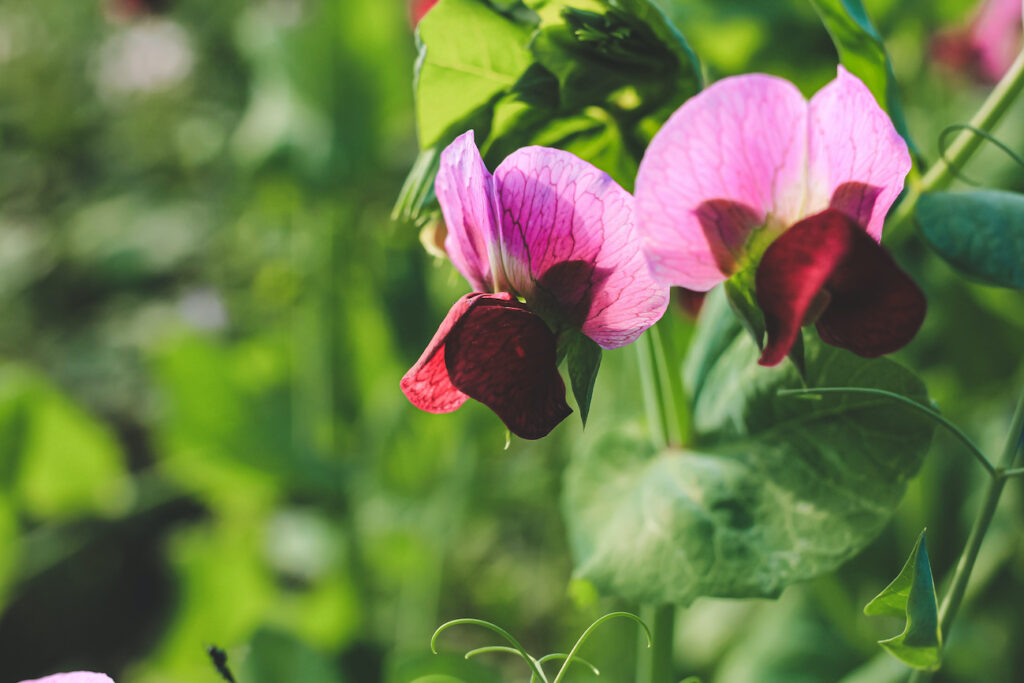
They’re one of our most-loved summer flowers, and they pack a punch in so many different ways. Whether you’re growing sweet peas for perfume, picking, as a decorative privacy screen, or to disguise an unwanted feature in the garden, there’s more to sweet peas than you ever imagined!
Perennial versus annual sweet pea
Sweet peas are most often grown as a spring or summer flowering annual (an ‘annual’ is plant which flowers, then dies). There are also winter-flowering varieties for those gardening in milder winter climates. Sweet peas can also be a perennial plant (one which returns year after year without being resown). The annual variety (Lathyrus Odoratus) is a vine grown from seed sown in autumn or late winter in warmer regions, and in mid to late spring in colder parts of the country. With pampering, it produces fragrant blooms throughout summer. Lathyrus Latifolius (the perennial sweet pea) is grown from seed in the same way, but does not offer the perfume which Odoratus supplies. Latifolius is a vine which grows in a more bushy fashion. It sports a grey-green leaf with smaller, single coloured flowers and tends to be more frost hardy than its annual cousin.
Growing for perfume
Gardeners who grow sweet peas for perfume are always on the lookout for varieties which produce the sweetest of scents, and in this regard, Kiwis are fortunate to have plant breeder, Dr Keith Hammett, in their midst. Auckland-based Dr Hammett has developed some of the most highly perfumed sweet peas including ‘High Scent,’ ‘Enigma,’ and ‘Just Maybe.’
Growing for long stems
Sweet pea connoisseurs not only grow these beautiful annuals for their perfume, but also for their length of stem. Stem length is an advantage when picking for the vase, and especially when using the blooms in bouquets. ‘Castlewellan’ from Emerden is a favourite long stemmed variety, as well as those attributed to breeding by Dr Hammett. Dr Hammett’s include the pure white ‘Aoraki,’ which produces 6-7 blooms per long stem, and ‘Candyfloss.’
One for the collectors
If you are a sweet pea collector, look out for Lathyrus belinensis. A close relative of odoratus, it was discovered in Turkey and was only given an official name in 1988. With red petals and bright yellow wings, it flowers in summer, is perfect for growing in a container, and creates a real talking point when fellow gardeners come to visit!
How to pick sweet peas
One of the only disappointing aspects of sweet pea blooms is they last such a short time in the vase. But here’s the secret: when picking sweet peas, pick a branch with the bloom (by branch, we’re referring to a section of foliage from which the flower stem branches). You’ll not only have beautiful, longer-lasting blooms, but the pretty green leaves and decorative tendrils that go with them! Adding a drip of household bleach and half a teaspoon of sugar to your vase water can help prolong the life of the blooms. The sugar feeds the stems while the bleach deters the build-up of algae which can block stems and prevent them from taking up water. Filling your vase right to the top with water also helps prolong bloom life – so keep topping up the water daily.
Sweet peas signify pleasure, gratitude, and loyalty, so whether as seeds or flowers, they are always a meaningful gift to give to a friend.