
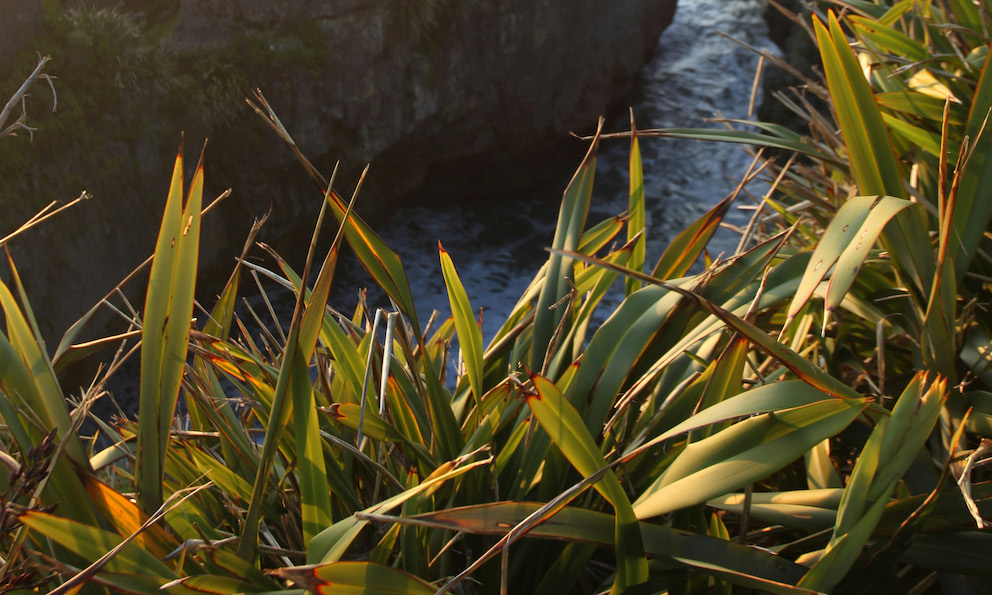
Harakeke (New Zealand flax) is so ubiquitous, we walk past it without so much as a second glance. Yet this relative of the daylily family was one of the most important plants to early Māori. It still holds special significance for the culture which uses it to make baskets, clothing, and footwear. However, for modern, everyday purposes, harakeke is of value to everyone. Whether you use it in and around your home or garden, or enjoy it as a material in craft projects, New Zealand flax is a plant we should always have close at hand. If you haven’t already discovered the following uses for versatile harakeke, we hope you’ll try them out!
Around home
New Zealand’s early colonial population named harakeke ‘flax’ because the strong fibres in its leathery leaves reminded them of those found in European linen flax (Linum usitatissimum), the plant from which linseed is harvested. Today, harakeke’s strong fibres provide us with a ready alternative to string for tying up parcels and plants. To access this useful fibre, use a blunt knife to scrape the green surface off both sides of flax leaves. The white fibre exposed beneath (knowen to Maori as ‘muka’ can be plaited into string or left hanging on a hook is a cool, dry place, where it can be pulled off and used for string when required.
Many Kiwi kids have grown up with the fun of weaving table mats from split flax leaves. This easy craft can also extend to weaving larger mats for use as boot liners and picnic ‘rugs’, and mats to sit on when camping or fishing (where the raw materials are almost certain to be found).
Woven flax mats are a cheap and easy way to provide privacy screening on balconies if you live in a unit or apartment. Make the mat to the size your require, then use a staple gun to hold it to trellis or a wooden frame. The same method can be used to extend the height of a fence between you and a neighbouring property.
Split full lengths of flax into 3-4mm strips. Staple gun or tie them to a narrow piece of wood the width of your door frame. Thread sea shells which have a natural hole in hem, and beads, onto the strips at regular intervals, and hang up your finished creation to provide a natural fly screen.
In the garden
In the garden, use woven flax mats as environmentally-friendly weed matting around newly planted trees. Flax leaves can also be used to support the edges of a built up garden. To do this, push short lengths of bamboo into the ground around the area to be occupied by the garden. Weave flax leaves in and out between bamboo to create your enclosed space, then fill it in with your raised bed materials.
Provide shelter in chosen spots in the garden by weaving flax and bamboo hurdles. Push even lengths of bamboo into soft ground to a depth of 15cm, then weave flax leaves in and out between them to create a short ‘wall.’ The flax will keep the structure rigid so it can be gently pulled out of the ground and pushed back into the garden where required.
Build a compost bin by pushing stakes into the ground in a circular shape about the diameter of a car tyre. Weave flax leaves in and out through the stakes to create a ‘tube’ that will hold your compost.
Tie together 4 or 5 dried flax flower stalks. Secure them at the top with flax twine or some other strong string. Splay out the stalks at the base of the structure and push them into the garden to create a climbing frame for peas and beans.
Tie strips of light fabric or plastic to the tops of dry flax stalks and push them into the garden to act as bird-scarers.
Plant a dense hedge of flax to exclude dogs and cats from your garden.
With the grandies
Flax stalks float. Collect an armful of them, and tie them together with strips of flax to make a fun raft. Use strips of flax as a rope to tether the raft so no one floats away!
Make simple shapes from flax, such as fish, flowers, and stars. Hang them as decorations, give them as gifts, or glue gun them onto gift wrap.
Flax is far too useful and special to be taken for granted. Make sure you have at least one plant in your garden!