In Joseph Conrad’s novel Youth, a retired merchant seaman relates the story of his first voyage to the East. Marlowe is twenty years old at the time, and second mate of the Judea – a barque as decrepit as the young man is strong. In the middle of the Indian Ocean, the Judea’s cargo of coal catches fire. There is an explosion, and the crew take to the boats. Marlowe is in charge of the smallest boat, his first command. Days pass, of calm, of squalls, of rowing, until the survivors are blind with fatigue. I did not know how good a man I was till then. I remember the drawn faces, the dejected figures of my two men, and I remember my youth and the feeling that will never come back any more – the feeling that I could last for ever, outlast the sea, the earth, and all men. Marlowe makes landfall somewhere on the coast of Java and the memory of this moment has never left him: his whole life stretching ahead of him, filled with boundless promise and possibility. But age slowly wears us down, says the older Marlowe. Our faces lined, wrinkled … marked by toil, deceptions, success, and love, even though our weary eyes continue to look anxiously for something out of life, that while it is expected is already gone – has passed unseen, in a sigh, in a flash – together with the youth, with the strength, with the romance of illusions.
What strikes me about Marlowe’s poignant words is less his nostalgia for lost youth than the question of whether the young Marlowe and the old Marlowe would recognise each other if they met, and what, if anything, they would have in common. Undoubtedly there would be some physical resemblance, but would there be an emotional connection? It’s a little like seeing an old photo of yourself and finding it hard to remember how you actually experienced the world so long ago, or running into an old friend, and both of you declaring, ‘You haven’t changed a bit’, only to realise what you once shared and felt about each other is beyond recall. As the writer A.M. Homes puts it, alluding to the fact she was given up for adoption before she was born and only met her biological parents when she was an adult, ‘I have often felt the difference between who I arrived as and who I’ve become.'[1]
It is in our nature to compare who we are in the here and now with who we once were – to lament what time has wrought, congratulate ourselves for what we have achieved, regret the hurt we have caused others, or console ourselves that, at heart, we have not really changed. This self-assessment changes with our moods, our age, and our situations. Moreover, our searching questions cover both our personal lives and our collective histories. Are we better parents than our parents were? Is our present government better or worse than the previous one? Is our country really making progress in repairing the damage done during our colonial past?
There are no final answers to these questions. Some are ethical, such as balancing our commitments to family and work. Other questions are legal, such as when the statute of limitations runs out for a violent crime, or when a prisoner can be said to have paid his debt to society and be set free, or what is owed the indigenous people whose lands white settlers stole and whose livelihoods they destroyed?
It is not only the past to which we return in rethinking our lives, in the hope of settling old scores, redressing old wrongs or seeking redemption. We often feel compelled to revisit the places where we grew up, and are dismayed when we find familiar buildings torn down or landscapes despoiled. Or we track down childhood friends and old acquaintances, attending school reunions or writing to old flames. Through the eyes of significant others, we see and reassess ourselves.
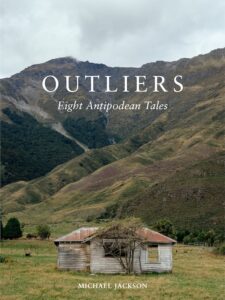
Outliers explores these themes through eight stories, all but one of which are fictional. For various reasons, my main characters have found more disappointment in life than fulfillment, and few are wholly at peace with themselves or feel at home in the world. No judgements are made or explanations given, for the writer’s task is not to provide definitive solutions to the mysteries of existence but to describe these as they are encountered and experienced in everyday life. Accordingly, the eight tales in Outliers address the question of how we are influenced by the places we grow up, the histories we inherit, the languages we speak, and the people to whom we are most deeply attached, without identifying any original self, mother tongue, native place, pivotal event, or significant other to which we may refer in explaining who we are or what we have become.