
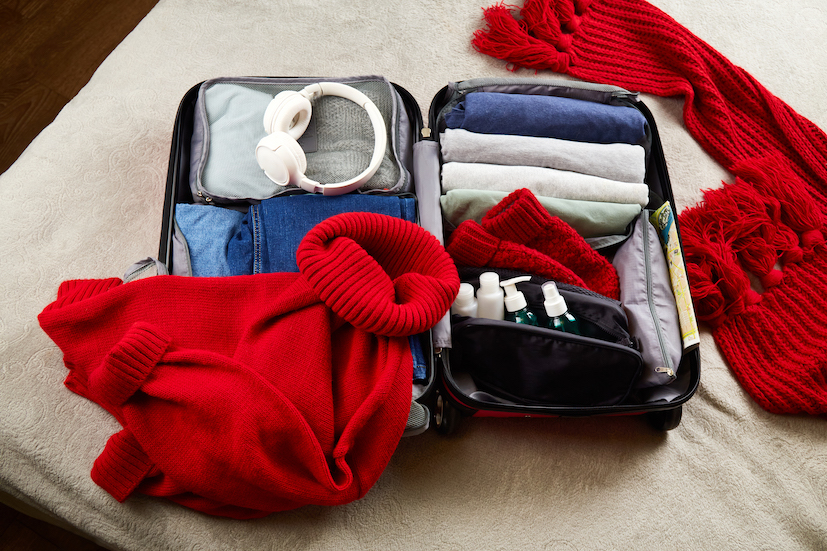
Packing for a winter trip can seem like a challenge. Cold-weather gear is often bulky, and it’s easy to feel like you need to bring more than usual. But with a little planning and the right approach, it’s entirely possible to travel light—even in winter—without compromising comfort, warmth, or style.
Packing light has many advantages. It makes moving through airports easier, leaves less to keep track of, and can even reduce luggage fees. More importantly, it allows you to focus on the trip itself, rather than managing your belongings. Below, we look at how to streamline your winter packing while still feeling well-prepared.
Reframing Winter Packing
It’s common to approach winter travel with a “just in case” mindset—adding extra layers, spare shoes, and backup outfits. In most cases, these extras never leave the suitcase.
The aim here is not to pack less for the sake of it, but to pack only what you’ll actually use. That means choosing clothing that’s practical, easy to mix and match, and suited to a variety of settings. Once you’ve done this a few times, you may even find the lighter approach becomes second nature.
A Simple, Layered Wardrobe
Winter packing is most effective when it’s built around layers. Three key layers will usually cover most conditions:
-
Base layer: A thermal top and bottom (merino works well) provides warmth without bulk.
-
Mid layer: A warm, breathable piece that provides insulation. This might be a lightweight wool jumper or cardigan, or a fleece if preferred. For those who feel the cold, a down vest can also work well as a mid-layer—worn under a jacket to keep your core warm without restricting movement.
-
Outer layer: A windproof and water-resistant jacket protects you from rain, wind, and colder conditions. Look for one that’s lightweight but warm, and easy to pack down when not in use.
For trips of one to three weeks, the following is usually sufficient:
- Two to three pairs of trousers (e.g. jeans, warm leggings, or travel pants).
- Four to five tops that layer easily and suit casual or slightly dressier occasions.
- One or two mid-layers, such as a wool jumper, fleece, or vest.
- A set of gloves, a warm hat, and a scarf—these take up little space but offer excellent warmth.
Choosing a neutral colour palette makes it easier to mix and match, reducing the number of items you need to bring.
Footwear
Footwear takes up more space than most other items, so it’s worth being selective. A single pair of sturdy, waterproof walking shoes or boots will usually be enough for both daytime outings and casual dinners.
If you do prefer a second pair, consider something lightweight—slip-on shoes for flights or indoor wear are a good option. Always wear your heavier pair in transit to save space in your bag.
Medications and Toiletries
For anyone taking regular medications, it’s important to pack carefully:
- Bring medicines in their original packaging, along with a printed copy of prescriptions.
- Carry enough for the full trip, plus a few extras in case of delay.
- Keep everything together in a resealable clear bag for easy access.
When it comes to toiletries, smaller sizes work best. Decant your favourites into travel containers or use solid alternatives where possible. Unless you’re travelling somewhere remote, you can usually buy anything you forget or run out of.
Items to Leave Behind
Overpacking often happens when we prepare for every possible situation. A few common items tend to add weight without adding value:
-
Heavy jumpers: One warm jumper is enough, especially if you’re layering.
-
Multiple coats: One well-chosen jacket will usually do the job.
-
Several pairs of shoes: Unnecessary unless you have specific plans that call for them.
-
Outfits for every day: Re-wearing and rotating is more efficient, especially when items are easy to mix and match.
Many accommodation providers now offer laundry facilities, so you don’t need to pack a fresh outfit for every day.
Comfort and Practicality
As a mature traveller, it’s worth prioritising ease and comfort without feeling the need to overpack. Clothing should be simple to put on, easy to move in, and suitable for changing weather.
Good luggage also makes a difference. Choose a lightweight bag with smooth wheels and a solid handle. A small crossbody or day bag is useful for daily essentials and keeps your hands free when exploring.
Confidence in Packing Light
Packing light for winter takes a little practice, but once you’ve done it, you may not want to go back. The aim isn’t to leave things out—it’s to bring only what adds value to the trip.
With the right clothing and a practical approach, you can stay warm, feel comfortable, and enjoy your travel without the extra weight.